
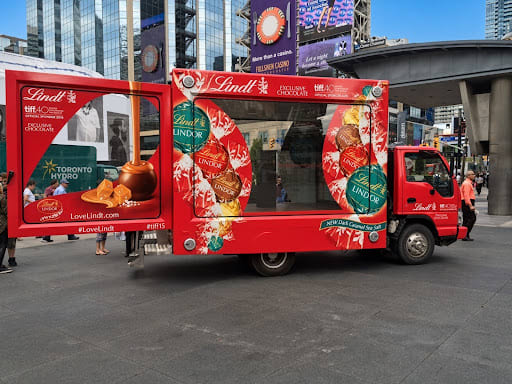
At the federal level, every food truck needs a Business Number from the Canada Revenue Agency, and operators who expect to earn more than $30,000 in any four consecutive quarters must register for GST/HST. Provincially, at least one person on the team must hold a valid Food Handler Certificate—budget $100 to $400 for the course, plus separate inspection fees, with renewals every one to two years. Most cities also require food trucks to operate out of a licensed commissary kitchen: a certified commercial space used for prep, storage, and cleaning. Operators must document and submit that agreement with the permit application.
Toronto's Municipal Licences and Recent Bylaw Changes
Toronto food truck operators need two separate authorizations: a Motorized Refreshment Vehicle Owner Licence and a Mobile Food Vending Permit. Drivers must also hold a Refreshment Vehicle Driver licence. The business licence costs $1,407.83 (including HST), while the vending permit is $3,746.71 for six months, $5,620.08 for nine months, or $7,493.41 for a full year. Proof of $2 million in liability insurance is mandatory.
Required documents include:
- Articles of Incorporation issued within the past year (or a current Corporate Profile Report)
- Criminal Record & Judicial Matters Check for all officers and directors
- Driving Record Abstract covering three years — no older than 30 days
Submit applications in person at 850 Coxwell Avenue, 3rd Floor; digital copies are not accepted. Payment is by debit, credit, or cheque only.
City Council approved significant bylaw changes in April 2026. As of June 15, 2026, vendors can operate up to 12 hours per day — more than double the previous five-hour limit. The 24-year moratorium on sidewalk vending in Wards 10, 11, and 13 has also been lifted.
Vancouver's Roaming Permit and Park Vending
Vancouver offers three vending types — stationary street, roaming, and park — but stationary street vending applications are currently closed for 2026. The roaming permit remains the primary option for most operators, allowing location changes across city property.
To qualify, operators must be legally entitled to work in Canada and hold:
- A current City business licence
- Valid liability and vehicle insurance
- A health permit from Vancouver Coastal Health
- A criminal record search for each unit operator
The roaming permit costs about $1,479 plus a $67 application fee (subject to annual increases), and you need $2 million in liability insurance. Operating hours run from 10 a.m. to 10 p.m., including setup and shutdown.
For park locations, the Vancouver Park Board runs a Summer Food Truck Program from May to October. Spots are awarded each spring through a request for proposals that evaluates vendors on menu uniqueness, sustainability, health permitting, and fee structure. Surrounding municipalities run separate permit systems.
Ottawa's Licence Categories and Health Requirements
Ottawa separates mobile vending into distinct licence classes:
- Mobile refreshment cart licence: hand- or pedal-powered vehicles
- Mobile refreshment vehicle licence: motor vehicles and trailers
- Mobile canteen licence: trucks selling food prepared off-site
- Refreshment stand licence: temporary structures
Required documents include:
- TSSA certificate of inspection
- Proof of fire code compliance
- $2 million in commercial general liability insurance
- Written authorization from the property owner
For events and markets, submit the Application Form for Food Service at a Special Event to Ottawa Public Health at least two weeks prior to the event date. Ottawa's Business Information Officer serves as the single point of contact for licence inquiries.
Every city requires a pre-issuance truck inspection and annual renewals. Health inspectors evaluate fridge and freezer temperatures, handwashing stations, separation of raw versus cooked food, equipment standards, fresh water tanks, grey water tanks, and dedicated hand-washing sinks.
What You Need Before You Apply
- Business Number from the CRA (and GST/HST registration if applicable)
- Valid Food Handler Certificate for at least one team member
- Signed commissary kitchen agreement
- $2 million in commercial general liability insurance
- Vehicle inspection certificates (TSSA in Ontario)
- Criminal record checks for all operators and directors
- Written property owner authorization (for private locations or events)
- Health permit or temporary food premises approval from the local health authority
Health inspections and permit processing generally require two to four weeks. Event-specific permits require applications at least two weeks in advance.
Skip the permit headaches and let the experts handle your next activation.
Navigating Toronto's food truck permits — from the Motorized Refreshment Vehicle Owner Licence to the Mobile Food Vending Permit — is a full-time job on its own. That's where On The Go Ads comes in. As a Toronto-based mobile marketing agency, they manage concept, logistics, staffing, permits, and execution from start to finish, so your brand stays front and centre. Whether you need a single-day activation or a multi-city Canadian tour, they've done it all. Leave the paperwork to them and focus on your brand.