
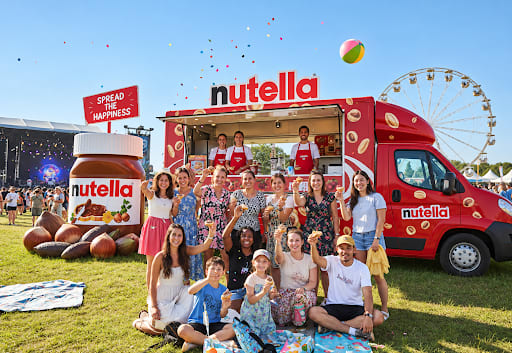
Nearly half of all food truck customers — 43% — are between 25 and 44 years old, discovering trucks at festivals (47%), business districts (34%), and college campuses (19%). Sixty percent return after a positive first experience, allowing a single activation to generate ongoing customer retention.
Canadian Seasonality and Festival Anchors
Sixty percent of food truck revenue lands between May and September. Peak demand begins in May and extends through early September alongside outdoor patio season nationwide.
Menu demand shifts with the weather. Cold beverages and frozen desserts peak in summer, with ice cream production reaching 17,310 kL in July. Cold coffee accounts for 21% of December sales, indicating steady demand for cold items into fall and winter.
For 2026, the Canadian Food Truck Festivals circuit includes Hamilton (Jul 11–14), Burlington (Jul 18–20), Toronto (Aug 1–4), Pickering (Aug 8–10), and Brampton (Aug 29–31). These dates serve as high-traffic anchors for scheduling logistics, staffing, and promotional pushes. Outside festival season, online ordering maintains off-peak revenue streams.
City Permit Requirements and Lead Times
Each Canadian municipality administers food truck licensing independently. Vending across multiple markets requires separate local permits:
- Toronto: Motorised refreshment vehicle business licences cost $1,407.83, plus a mobile vending permit ranging from $3,746.71 (six months) to $7,493.41 (full year). Requirements include $2 million in liability insurance, a fire suppression system, a propane safety certificate, and a vehicle safety inspection. Operating hours run up to 12 hours daily. Application processing takes several weeks to several months.
- Vancouver: Stationary street food vending permits are paused for 2026; roaming permits cost approximately $1,479 plus a $67 application fee. The Vancouver Park Board administers a separate Summer Food Truck Program running May through October via an RFP process.
- Ottawa: Operations require a refreshment vehicle licence, Ottawa Public Health food safety certification, and municipal authorization for parks or city property. Inspections evaluate food handling, temperature regulation, and sanitation.
Staffing and Logistics Checklist
Every activation requires food prep staff, brand ambassadors, and an activation manager trained in food handling certification, sampling protocols, and brand messaging. A dedicated tour manager oversees inventory, scheduling, permit compliance, and live reporting.
Serving window throughput dictates crew sizing: staff counts must match peak ordering volumes to prevent queue bottlenecks.
Route planning aligns with target-audience foot-traffic windows: lunch hours in office districts, commuter rush hours at transit hubs, class transitions on college campuses, and entry/exit gates at festival perimeters. Production timelines must also incorporate vehicle wrap printing and ingredient lead times.
Sample Campaign Timelines
Single-Day Activation (6-Week Timeline)
- Weeks 1-2: Finalize campaign concept, secure location, and submit municipal permit applications.
- Weeks 3-4: Hire activation crew, order branded assets, and source ingredients.
- Weeks 5-6: Run final logistics checks, complete staff training, and launch promotional campaigns.
Multi-City Activation: Toronto, Vancouver, Ottawa (12-Week Timeline)
- Weeks 1-3: Map route schedules, submit multi-city permit applications, and enter municipal RFPs.
- Weeks 4-6: Hire local staff across markets, inspect vehicles, and complete wrap installations.
- Weeks 7-9: Train field teams, coordinate supply chain inventory, and scout operational sites.
- Weeks 10-12: Complete final compliance audits, launch marketing campaigns, and execute tour operations.
KPI and ROI Tracking
Track operational and brand metrics: sales velocity, social mentions, channel reach, customer sentiment, and qualified leads generated.
Calculate total ROI by combining direct product revenue, earned media value, content generation value, and brand equity gains.
Post-campaign recaps should document site locations, crew hours, units distributed, engagement duration, gross impressions, cross-channel engagement rates, and lead pipeline value.
Ready to Take Your Food Truck Campaign Further?
Timing your food truck marketing is only half the battle — execution is where campaigns are won or lost. That's where On The Go Ads comes in. Whether you're planning a single activation for the Toronto Food Truck Festival or a multi-city tour from Vancouver to Ottawa, On The Go Ads handles concept, branding, staffing, permits, and logistics from start to finish. You focus on your brand; they handle everything that moves. If you want a partner who understands the Canadian market and delivers turnkey mobile campaigns with zero guesswork, explore their food truck rental in Toronto and see what's possible.